 Julian Smit
The emerald ash borer has been quietly devastating Ontario forests for years. This fall, we came to terms with what that means for ours.
When we moved here, roughly 80% of our small forest was ash.
We didn’t know that yet. You don’t inventory your trees when you’re falling in love with a property. You just see forest — beautiful, dense, and alive. The kind of forest that makes you feel, for the first time in years, like you’re exactly where you’re supposed to be.
The emerald ash borer didn’t care about any of that.
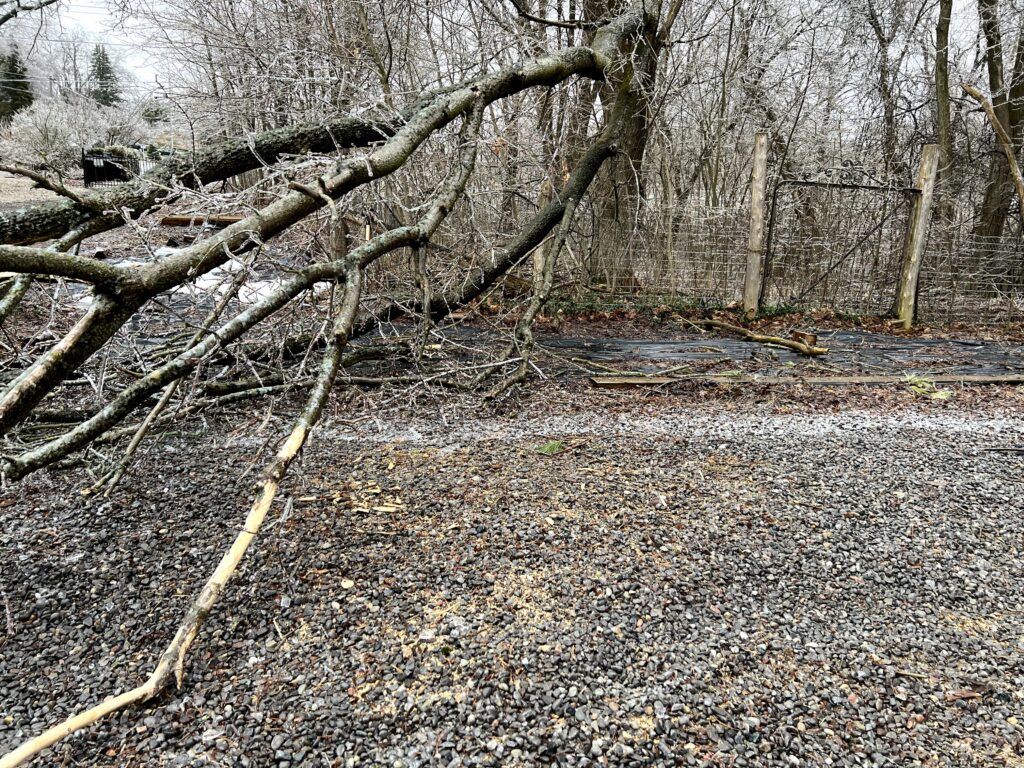
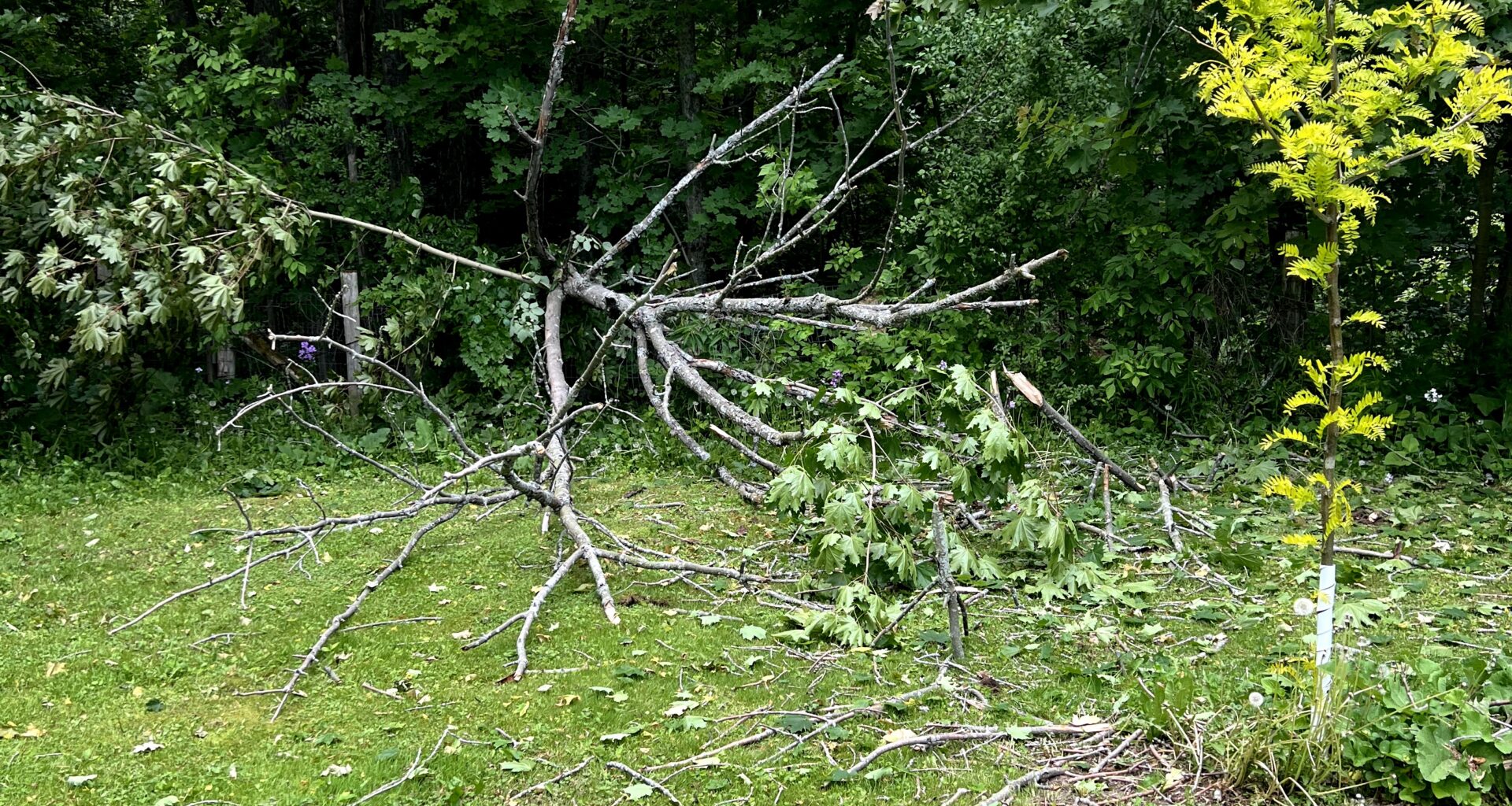
If you’re not familiar with it: the emerald ash borer is a beetle, originally from Asia, that has been systematically destroying ash trees across North America for over two decades. It’s been in Ontario long enough that most people in the province have seen its work without knowing what they were looking at — dead canopy, stripped bark, D-shaped exit holes in the trunk. By the time a tree shows visible symptoms, it’s already too late.
Our ash trees were already gone before we arrived. We just didn’t know it yet.
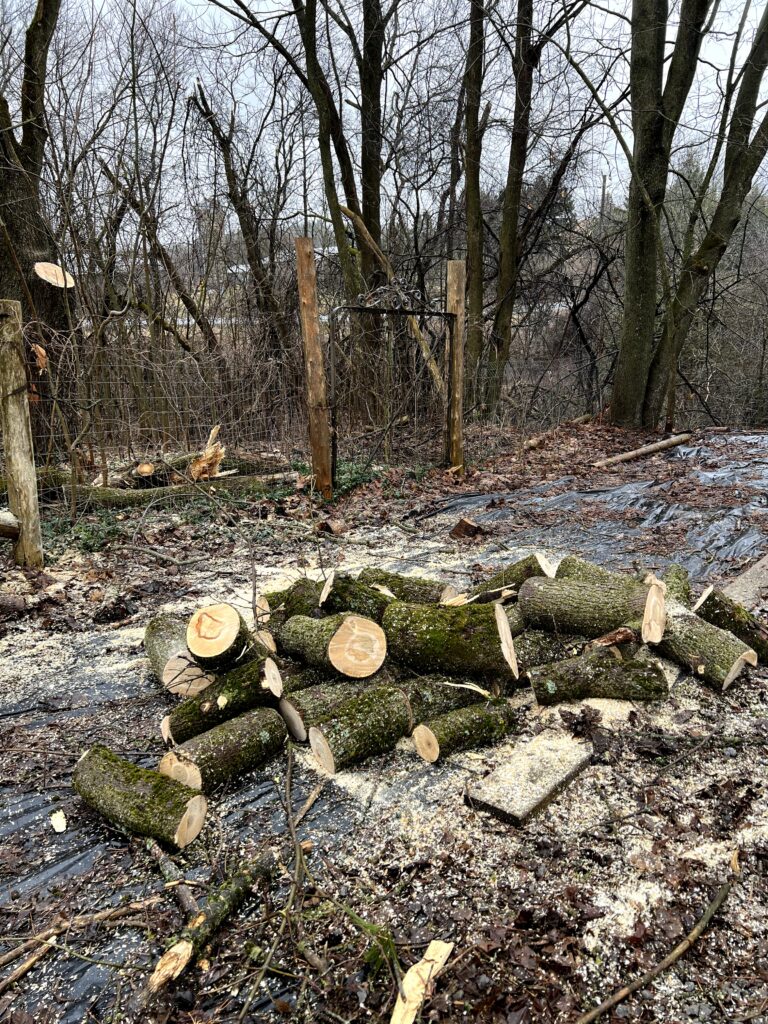
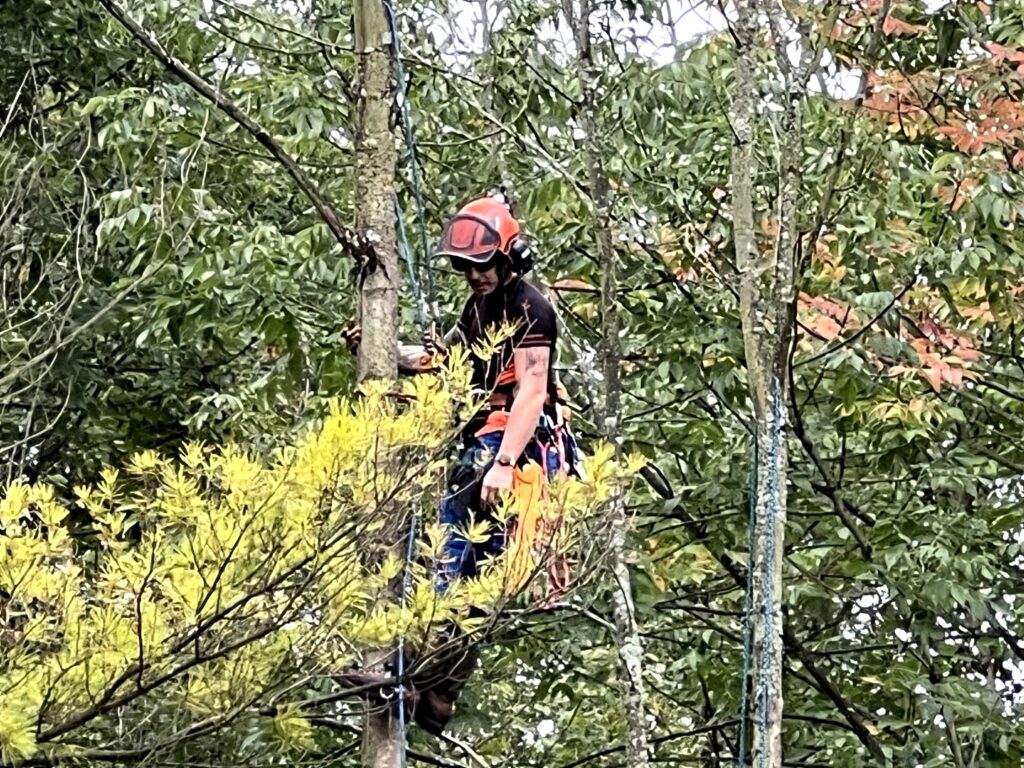
What followed has become an annual rhythm. Riley — our tree medic, which is genuinely what I call him — along with Paul and their crew, handles the controlled take-downs. The ones we plan for, assess, and bring down safely. The others come down on their own, usually in windstorms or ice storms, which gives the whole thing an unpredictable, occasionally dramatic quality. If you read the post about our first winter, you now know what that sounds like from the inside.
It would be easy to frame this as loss, and it is loss — real and visible. But there’s another way to see it.
A forest that was 80% one species was always fragile. Monocultures, even beautiful ones, are vulnerable by design. What’s coming next is something more resilient — a mixed canopy, slower to grow but harder to kill, with more biodiversity and more long-term stability. We’re already thinking about what we plant, what we encourage, and what we leave to find its own way.
The land is being reset. That’s not nothing.
Stewardship, I’m learning, isn’t about keeping things the way they were. It’s about understanding what the land needs now — and being willing to do the work, season after season, to help it get there.
The ash are gone. The forest isn’t.
[Next: why showing up — to a bonfire, a maple syrup festival, a goat farm — turns out to be one of the most important things you can do when you move somewhere new.]


 Julian Smit